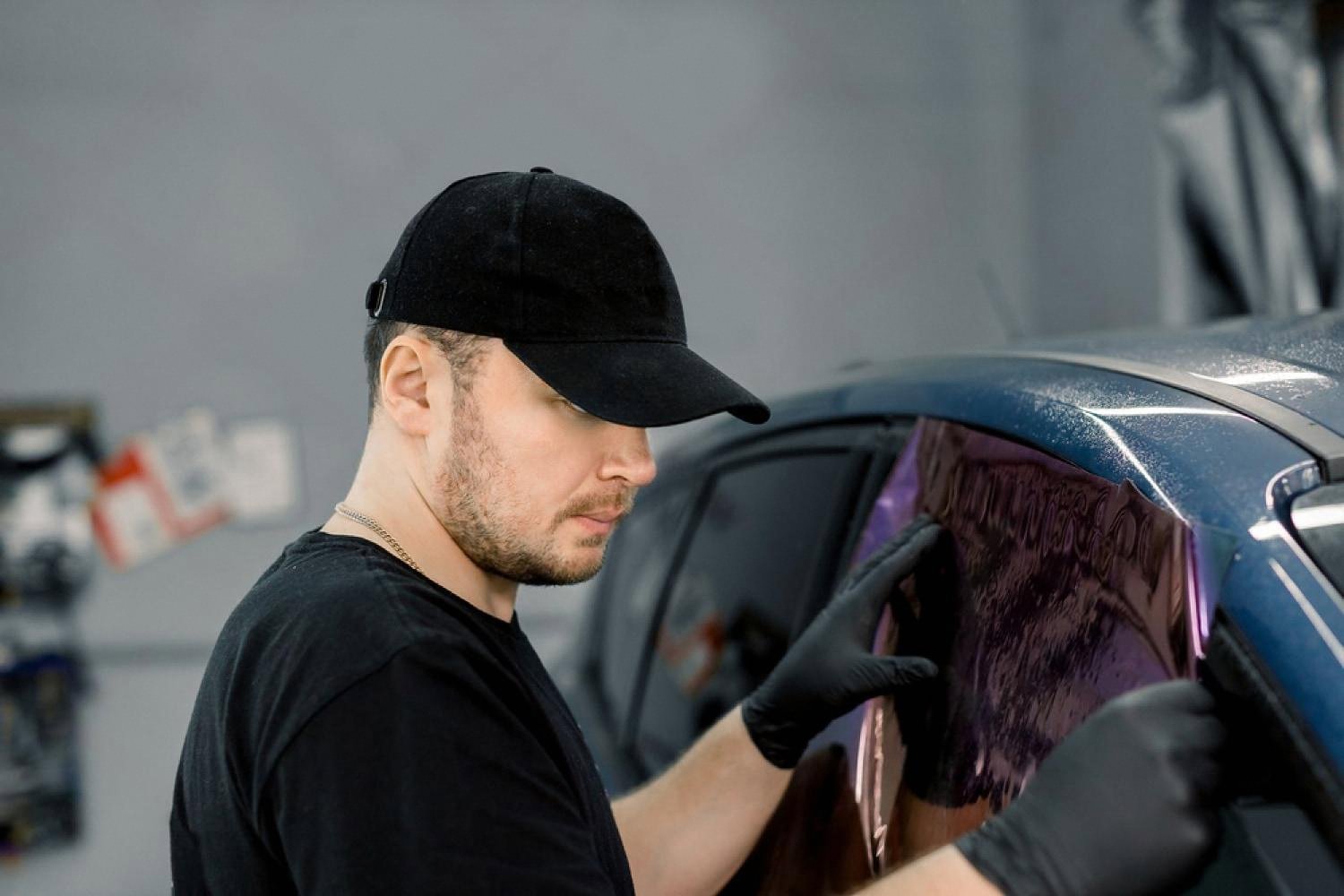
UAE guide
Quality window tint and UV rays: what really gets blocked
In the UAE, the sun is not a background detail. It is the single loudest thing acting on your car every day. A premium window tint installation can block up to 99% of ultraviolet radiation, but that headline number hides a lot of nuance. This guide walks through the science, the difference between UV rejection and heat rejection, what UAE law allows, and how the answer changes across Dubai Marina, Abu Dhabi Corniche, and the Sharjah industrial zones where most cars are actually tinted.
The science
Understanding UV radiation in the Gulf
Sunlight reaching the ground is a mix of visible light, infrared (which you feel as heat), and ultraviolet. UV itself splits into UVA and UVB. UVB is largely filtered by the atmosphere and by ordinary automotive glass, but UVA passes through side and rear windows almost untouched. UVA penetrates deep into the skin and is the main driver of photoaging and long-term skin damage, according to the Skin Cancer Foundation.
The Gulf region sits under one of the highest UV index readings on earth. Summer midday UV in Dubai and Abu Dhabi regularly reaches 11 or 12 on the WHO scale, which is classed as extreme. That is the environment your dashboard, leather seats, and left arm are exposed to every time you drive.
How different window films actually block UV
Ceramic tint
Uses non-conductive ceramic nanoparticles. Blocks up to 99% UV and a large share of infrared without interfering with GPS, radio, or Salik signals. The top choice for UAE summers.
Carbon tint
Carbon particles absorb infrared and block roughly 99% UV. No metal content, no signal interference, and it holds its colour better than dyed film under Gulf sun.
Dyed film
The budget layer. Dyed films rely on absorbing light in the dye itself. UV rejection is decent when new, often quoted around 95 to 99%, but the dye fades under sustained UAE heat and can turn purple within a couple of years.
Metallic film
Tiny metal flakes reflect heat and UV very effectively, blocking up to 99% UV. The trade-off is that some metallic films interfere with mobile signals and toll transponders, which matters if you drive Sheikh Zayed Road daily.
Not the same thing
UV rejection vs heat rejection
- UV rejection measures how much ultraviolet radiation the film stops. Most quality films sit at 99%, regardless of how dark they look.
- Total Solar Energy Rejected (TSER) is the honest heat number. It combines UV, visible light, and infrared. Good ceramic films hit 50 to 65% TSER.
- Infrared rejection (IRR) is what makes the cabin feel cooler. A film can claim 90% IRR but only in one narrow band, so always ask for the full-spectrum figure.
- Visible Light Transmission (VLT) is how much light passes through. A 35% VLT film lets 35% of visible light in. Darker is not automatically better for UV.
Neighbourhood guide
Where UAE drivers get tinted, and why it matters
Tint quality varies wildly between installers. Three areas of the country cover most of the real market, and each has its own habits.
Dubai: Al Quoz and Business Bay
Al Quoz is the traditional home of automotive workshops in Dubai, and most reputable tint studios have a bay there. Cars in Dubai see long stretches on Sheikh Zayed Road, valet parking under open sun at Downtown venues, and mall rooftops that can hit surface temperatures far above ambient. Independent measurements have recorded dashboard temperatures above 90°C in parked cars during July and August in the UAE. A quality ceramic film with 99% UV rejection and 60% TSER can drop cabin peak temperatures by 10 to 15°C, which is the difference between a steering wheel you can hold and one you cannot.
Abu Dhabi: Mussafah and the Corniche commute
Abu Dhabi enforces tint limits more strictly than most emirates, so the conversation in Mussafah workshops tends to focus on getting maximum UV and heat rejection at a legal VLT. This is where ceramic film earns its price: you can run a 50% VLT (well within legal territory) and still get 99% UV rejection plus strong infrared blocking. Drivers commuting daily along the Corniche or out to Yas Island benefit most, because side windows take direct low-angle sun for extended periods.
Sharjah and the Northern Emirates
Sharjah industrial areas host a lot of budget installers, which is where dyed film problems become visible after a year or two: purple hue, bubbling at the edges, and UV performance that quietly drops. If you live in Sharjah, Ajman, or Ras Al Khaimah, the smart move is to travel for a certified installer rather than save 300 to 500 dirhams on a film that will not last one full summer cycle. Ask to see the manufacturer’s spec sheet with the SEER and UV rejection figures printed on it.
UAE tint law: know the VLT limits before you buy
The UAE allows up to 50% tint darkness on private vehicles across most emirates, meaning at least 50% of visible light must pass through the film plus glass combined. Abu Dhabi has historically been stricter on enforcement, and windshields have their own tighter rules. Fines are issued for non-compliant tint, and vehicles can fail annual inspection. The good news is that legal VLT does not compromise UV protection: a certified 50% VLT ceramic film still blocks 99% of UV. Always ask the installer for a certificate of compliance and keep it in the glovebox.
Why 99% UV rejection matters beyond comfort
- Skin protection. The American Academy of Dermatology notes that UVA passes through untreated side windows, and long commutes correlate with higher rates of skin damage on the driver’s side of the face and arm.
- Leather and dashboard longevity. UV breaks down the polymers in dashboards and the finish on leather seats. Cars driven in the UAE without quality tint often show cracked dashboards within 3 to 5 years.
- Reduced interior fading. Fabrics, headliners, and steering wheel wraps hold their colour dramatically longer behind 99% UV film.
- Lower cabin temperature. Less strain on the AC compressor, better fuel economy, and a cabin that reaches comfortable temperature faster after parking.
- Glass safety. Quality film holds shattered glass together in a collision, an underrated benefit.
Choosing the right tint for UAE conditions
- Prioritise ceramic or high-grade carbon if the car will stay with you more than two years. The higher upfront cost pays off in longevity and heat rejection.
- Check the warranty. Reputable manufacturers offer lifetime warranties against fading, bubbling, and delamination. Budget films rarely offer more than 12 months.
- Ask for the exact spec sheet. UV rejection, TSER, IRR at 950nm, and VLT should all be printed on paper, not quoted from memory.
- Confirm legal VLT before installation. Get it in writing that the finished film + glass combination will pass RTA or Abu Dhabi Police inspection.
- Look at the installer, not just the film. A great film applied badly will bubble at the edges within one Gulf summer.
Frequently asked questions
Does darker window tint block more UV rays?
No. UV rejection is a function of the film chemistry, not the darkness. A light 70% VLT ceramic film can block 99% of UV, and a very dark dyed film can block less. Ask for the UV rejection number on the spec sheet rather than judging by shade.
Is 99% UV rejection just marketing?
It is a real, measurable figure, but only when the film is tested to a recognised standard such as ISO 9050 or ASTM E903. Reputable brands publish these test results. If an installer cannot show you a spec sheet, treat the 99% claim with caution.
What is the legal tint limit in the UAE?
Most emirates allow up to 50% tint on private vehicles, meaning at least 50% visible light must pass through. Windshields have stricter rules. Enforcement is toughest in Abu Dhabi. Always ask your installer for a compliance certificate to avoid fines at inspection.
How much can quality tint reduce cabin temperature in UAE summers?
A quality ceramic film with high infrared rejection can lower peak cabin temperatures by roughly 10 to 15°C compared with untinted glass. That translates into a cooler steering wheel, less AC strain, and quicker cooldown after the car has been parked in direct sun.
Do I still need sunscreen if my car has 99% UV tint?
Inside the car, exposure through side windows is dramatically reduced. However, the windshield may have different rated film, and any time you step out (petrol stations, valet drop-off) you are exposed again. Dermatologists still recommend daily sunscreen for anyone driving regularly in the Gulf.
How long does a good window tint last in the UAE climate?
Quality ceramic and carbon films from reputable brands typically last 10 years or more in Gulf conditions and carry lifetime warranties. Budget dyed films often start fading, bubbling, or turning purple within 1 to 3 years because of the sustained heat and UV load.
Will ceramic tint interfere with my Salik tag or mobile signal?
No. Ceramic and carbon films are non-metallic, so they do not block radio frequencies. Older metallic films can occasionally cause weaker signal for GPS, radio, or toll transponders, which is one reason ceramic has become the default premium choice in the UAE.

“Everyone has to find what is right for them, and it is different for everyone. Eating for me is how you proclaim your beliefs three times a day. That is why all religions have rules about eating. Three times a day, I remind myself that I value life and do not want to cause pain to or kill other living beings. That is why I eat the way I do.” -Natalie Portman